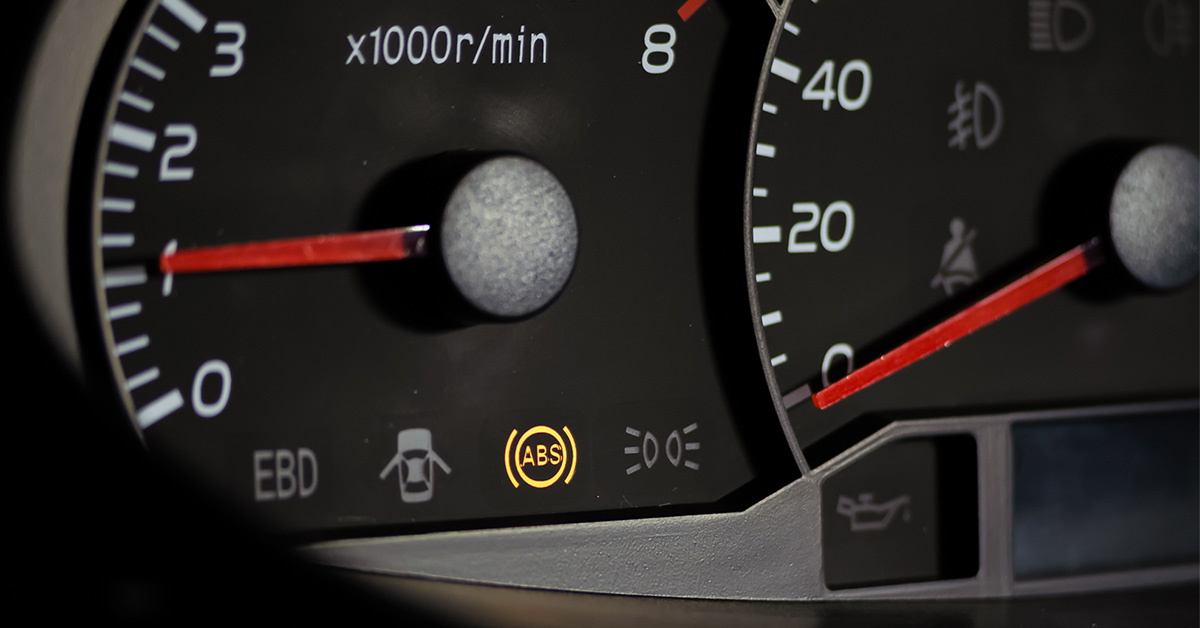
Few dashboard lights cause as much quiet worry as the amber ABS light. Your brakes still seem to work. The car drives normally. So is it a real problem or just an annoying glow?
Here is the honest answer from the technicians at Aposhian Garage in Millcreek: your brakes still work, but an important safety system does not. And with a Salt Lake City winter ahead, that is not a light to ignore for long. So does it need ABS light repair right away, or can a Utah driver let it glow for a while?
What Your ABS System Actually Does
ABS stands for anti-lock braking system. Its job is simple and critical: it keeps your wheels from locking up during hard braking so you can keep steering while you stop.
Without ABS, a panic stop on a slick surface can lock the wheels, and a locked wheel slides instead of grips. You lose the ability to steer around whatever you are trying to avoid. ABS pulses the brakes many times per second, faster than any human foot, keeping the tires at the edge of grip.
On dry summer pavement you might never notice ABS working. On a snowy morning on 3900 South or an icy stretch of I-215, it can be the difference between a close call and a collision. That is exactly why an ABS warning in September or October deserves attention before the first storm, not after.
Why the ABS Light Comes On
When the ABS light is on, the ABS module has detected a fault, logged a trouble code, and shut the system off. The most common causes we see:
- A failed wheel speed sensor. This is the number one cause. Each wheel has a sensor that reports its speed to the ABS module. Sensors live in a brutal environment of road salt, water, and debris, and they fail regularly, especially in climates like ours.
- A damaged tone ring. The toothed ring the sensor reads can crack or corrode, sending erratic signals.
- Low brake fluid. The fluid level sensor can trigger ABS and brake warnings. Low fluid usually means worn pads or a leak, both of which need prompt attention.
- A blown fuse or damaged wiring. Rodent damage, corrosion, and road debris can break the circuit.
- A failing ABS module or pump. Less common and more expensive, but it happens, particularly on higher mileage vehicles.
Is It Safe to Drive with the ABS Light On?
Short term, in most cases, yes. Your normal braking still works. But you are driving without anti-lock protection, which means a hard stop on gravel, rain, snow, or ice can lock the wheels and take your steering away exactly when you need it most.
One important exception: if the ABS light and the red brake warning light are on at the same time, treat it as urgent. That combination can signal low fluid, a hydraulic problem, or a failure that affects your basic braking. Do not put miles on the car. Have it towed or drive it cautiously and directly to a shop.
Also worth knowing: on many vehicles, an ABS fault also disables traction control and stability control, since those systems use the same sensors. One small sensor failure can quietly switch off three safety systems at once.
What an ABS Diagnostic Involves
A proper diagnosis takes more than reading a code. Generic code readers often cannot access ABS codes at all, which is why the light stays a mystery to many drivers. At the shop, a technician will:
- Scan the ABS module with a professional scan tool to pull the specific fault code.
- Test the suspect sensor's signal, wiring, and connector rather than guessing and replacing parts.
- Inspect the tone rings, fluid level, and fuses.
- Repair the fault, clear the codes, and road test to confirm the light stays off.
Wheel speed sensor replacement is usually a modest repair. Module or pump replacement costs more, which is one more reason to diagnose accurately instead of throwing parts at the problem.
Does an ABS Light Fail Emissions in Utah?
A common question, and good news for once: Utah's county emissions test checks your emissions system, not your ABS. The state also eliminated routine safety inspections for most passenger vehicles back in 2018. So an ABS light will not fail your renewal.
But do not confuse "passes the test" with "safe to drive." The state will renew your registration; physics will not give you a pass on an icy hill in January.
Get It Checked Before Winter
Brake system health is the heart of winter readiness. If your ABS light is on, have it diagnosed now, while the roads are still dry. And if your pads, rotors, or fluid have not been inspected recently, it is worth having the whole system looked over in one visit.
Aposhian Garage has served Millcreek and the greater Salt Lake City area for decades. We will tell you exactly what triggered the light, what it costs to fix, and what can safely wait. Schedule your brake and ABS inspection today.
Due for a Break Check? Aposhian Garage serves Millcreek and Salt Lake City drivers with thorough service for all makes and models. Call (801) 467-3344 or schedule your appointment.
Frequently Asked Questions
In most cases you can drive short term, because your regular brakes still function. You are driving without anti-lock protection, though, so hard stops on wet, icy, or loose surfaces are riskier. If the red brake light is on at the same time, stop driving and have the vehicle checked immediately.
A failed wheel speed sensor. Each wheel has one, they are exposed to salt, water, and debris, and they fail often, especially on vehicles driven through Utah winters. Wiring damage, low brake fluid, blown fuses, and tone ring damage are other common causes.
No. Utah's emissions test does not check ABS, and Utah eliminated routine safety inspections for most passenger vehicles in 2018. The light will not block your renewal, but the underlying problem still affects your safety.
Yes. A low fluid level can trigger the ABS light, the brake warning light, or both. Low fluid usually points to worn brake pads or a leak in the system, so it deserves prompt attention rather than a top-off.
It depends entirely on the cause. A wheel speed sensor is typically a modest repair. Wiring repairs vary. An ABS module or pump is a bigger job. This is why an accurate diagnosis matters: it keeps you from paying for parts you do not need.
Not usually. The ABS light by itself means the anti-lock system is offline while your basic brakes keep working. The exception is when it appears together with the red brake warning light, which can indicate a problem with your primary braking system.
Written by the team at Aposhian Garage, providing auto maintenance and repair in Salt Lake City since 1928.
