
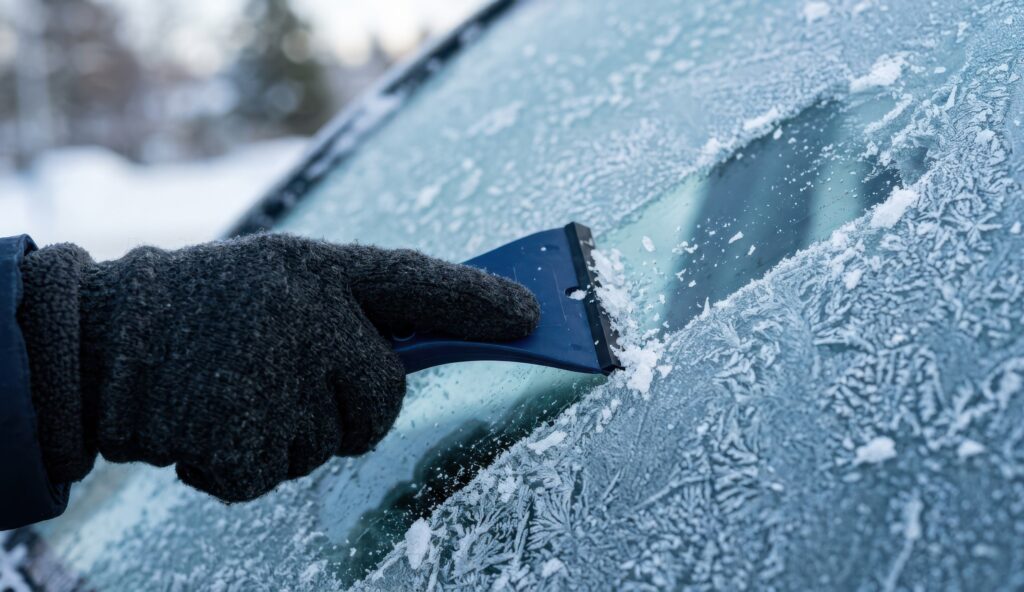
There is a particular kind of misery in scraping your windshield at 6:45 on a January morning, climbing into the car, and getting a face full of cold air from the vents. By the time most drivers call us about a dead heater, the season's first storm has already arrived and they have been driving cold for a week.
Here is the good news: a car heater that blows cold usually fails for one of a handful of reasons, most of them very fixable. The team at Aposhian Garage in Millcreek, Utah handles car heater repair all season and sees every one of them each fall. Here is how your heat works, why it quits, and why September and October are the right months to deal with it.
How Your Car Makes Heat
Your heater is not a separate appliance. It borrows heat from the engine. Hot coolant circulates from the engine through a small radiator behind your dashboard called the heater core. The blower fan pushes air across that hot core and into the cabin.
That design means one important thing: almost anything that disrupts your cooling system also disrupts your heat. A heater problem is very often a cooling system problem wearing a disguise, and the same fault that leaves you cold can leave your engine overheating in July.
The Most Common Reasons a Car Blows Cold Air
1. Low Coolant
The most common cause, and the one to check first. If the coolant level drops, the heater core is one of the first places to run dry, because it sits high in the system. The catch: coolant does not evaporate in a sealed system. If yours is low, it is going somewhere, through a leaking hose, radiator, water pump, or worse. Topping it off treats the symptom. Finding the leak treats the problem.
2. A Stuck Thermostat
The thermostat controls when coolant flows through the engine. If it sticks open, the engine never reaches full operating temperature, and you get lukewarm air at best. A telltale sign: your temperature gauge reads lower than normal, or your heat fades during steady highway driving. Thermostats are inexpensive parts, and replacing a lazy one often transforms the heat output.
3. A Clogged Heater Core
Years of old coolant deposit scale and sediment in the heater core's narrow passages until warm air just cannot pick up enough heat. This is exactly why we push regular coolant flushes for Utah vehicles. If one side of the cabin blows warm and the other cold in a dual-zone system, or the heat slowly declines over months, a restricted core is a prime suspect. Sometimes a professional flush restores it. A fully plugged or leaking core requires replacement, which is labor-intensive because of its location behind the dash.
4. A Failed Blend Door Actuator
Behind your dashboard, small motorized doors direct air across the heater core or around it. When an actuator fails, the door stays stuck on cold no matter what the dial says. The classic symptom is a clicking or knocking sound behind the dash when you change the temperature setting.
5. Blower Motor Problems
If you have heat but barely any airflow, or the fan only works on certain speeds, the blower motor or its resistor is the likely culprit. No airflow means no heat delivery, even with a perfectly healthy engine.
6. Air Pockets or a Failing Water Pump
Air trapped in the cooling system after a leak or a repair can block coolant flow to the heater core. A weakening water pump can do the same. Both tend to come with other symptoms, like temperature swings on the gauge.
Why No Heat Is a Safety Problem, Not a Comfort Problem
In a Salt Lake City winter, your heater is also your defroster. Without hot air, you cannot keep the windshield clear of fog and ice, and driving with a half-cleared windshield on snowy roads is genuinely dangerous for you and everyone around you.
A dead heater can also be the first visible sign of a cooling system failure that is quietly threatening your engine. The heater core running cool because coolant is low is the same coolant loss that leads to overheating and, in the worst cases, head gasket damage. Treat cold vents as an early warning, because that is usually what they are.
What You Can Check Yourself
- With the engine cold, check the coolant level in the overflow reservoir. If it is low, note it, top it up with the correct coolant, and watch whether it drops again. A dropping level means a leak.
- Watch your temperature gauge. Running colder than normal points to a thermostat. Running hotter than normal means stop driving and get it checked before engine damage occurs.
- Listen for clicking behind the dash when adjusting temperature, which points to a blend door actuator.
Beyond that, heater diagnosis is a shop job. The system involves pressure testing, temperature measurements at the heater hoses, and scan tool checks on the climate control system, and guessing at parts gets expensive quickly.
Fix It in the Fall, Not in the Storm
Every November, the first hard cold snap fills our schedule with no-heat calls within days. The drivers who mentioned weak heat back in September got it fixed in an afternoon. Get ahead of it: if your heat was weak last winter, or your coolant is overdue for a flush, book now.
Aposhian Garage has kept Millcreek and Salt Lake City drivers warm on winter roads for decades. We will find the actual cause, explain your options plainly, and get your defroster ready for the first storm. Schedule your heater and cooling system check today.
Frequently Asked Questions
The most common causes are low coolant, a stuck thermostat, a clogged heater core, a failed blend door actuator, or blower motor problems. Low coolant is the first thing to check, and if it keeps dropping, you have a leak that needs attention.
Yes. The heater core is one of the first parts of the system to be starved when coolant runs low. Because coolant does not disappear on its own in a sealed system, low coolant means a leak somewhere, and the heater is your early warning.
It ranges widely because the causes range widely. A thermostat or coolant repair is typically modest. Blend door actuators vary by how buried they are. Heater core replacement is the most expensive common repair, mostly labor, because the core sits deep behind the dashboard. An accurate diagnosis first keeps you from paying for the wrong part.
Mechanically the car may run fine, but without heat you have no working defroster, and a fogged or iced windshield is a serious hazard on winter roads. If the cause is low coolant, you may also be one cold snap away from an overheating or engine damage problem.
That pattern usually points to low coolant or a weak water pump, because at idle there is less coolant flow pushing heat through the heater core. It is worth having the cooling system inspected soon, since both causes get worse with time.
Follow your manufacturer's schedule, which for many vehicles falls in the range of every 30,000 to 100,000 miles depending on coolant type. Utah's temperature extremes are hard on coolant, and fresh coolant protects the heater core, radiator, and water pump alike.
Written by the team at Aposhian Garage, providing auto maintenance and repair in Salt Lake City since 1928.